Deep Field

Starting

Deep Field
11 October 2026 3052 stories tracked

11 October 2026 A long exposure on everything happening off Earth.

Every three hours this site reads 51 feeds from NASA, ESA and the observatories, files what comes back into eleven subjects, and works out the rest for itself — what is overhead, what you could see through what you own, and from where on Earth.

Tonight

New moon · 2% lit · 1 days old

The whole sky →

The Moon

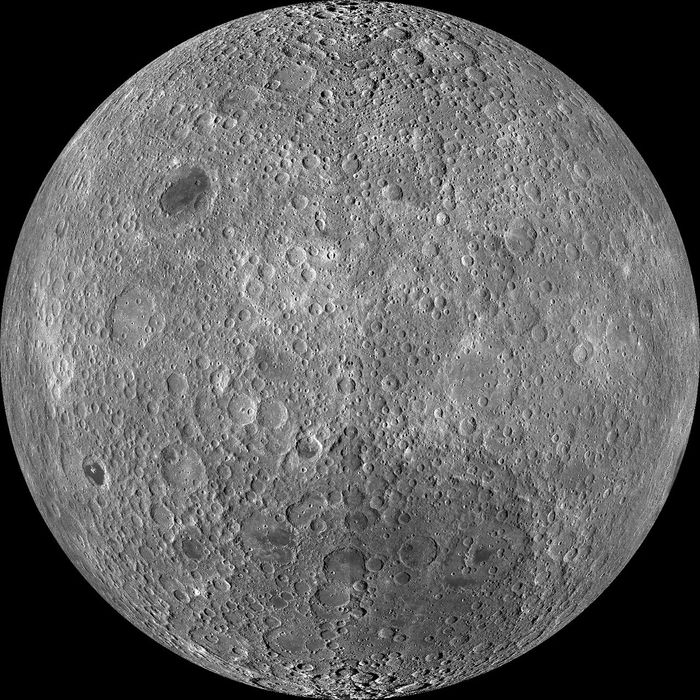
The Moon is effectively absent — 2% lit and lost in the Sun's neighbourhood. These are the darkest nights of the month and the only ones on which the faintest half of the catalogue is worth attempting at all.

Planets and the Sun

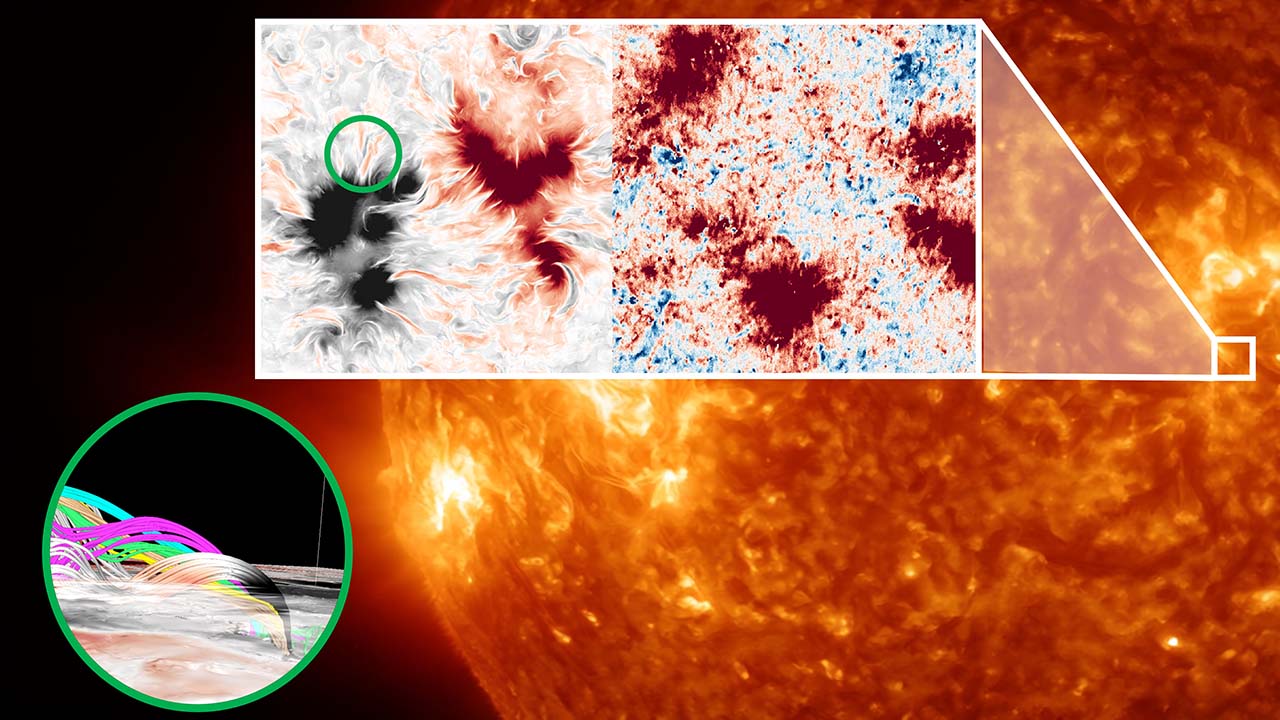
Mercury, Venus and Saturn are in the evening sky after sunset; Mars and Jupiter come up before dawn. The Orionids are running, peaking in ten days — about 7 an hour under a decent sky, rather than the 20 the almanacs print for perfect conditions and a radiant overhead. Kp has reached 5.3 in the last day — unsettled, and worth a look north if you are far enough from the equator.

Worth going out for

M15

A globular cluster in Pegasus, near the meridian around midnight and straightforward in 10×50 binoculars from a Bortle 4 or better. The core of this one has fallen in on itself, and the stars at the centre are packed so tightly that we still cannot say whether what holds them is a black hole or simply an enormous crowd.

mag 6.2 · 21.1 mag/□″ · 18′ · RA 21h 30m

1968 Apollo 7 flies the redesigned command module — Eleven days in orbit, the whole crew with head colds, and none of them flew again. More from this date →

Computed from the clock, and true from anywhere on Earth. Anything that depends on your latitude is on the Overhead page rather than guessed at here.

Latest

Browse by subject →

Jove and Luna

Giovanni Passalacqua from Ragusa, Sicily, Italy A waning crescent Moon hangs less than 3° from Jupiter in western Leo before dawn on…

The Gallery

Every frame →

NASA Science

APOD · NASA — public domain ·

NASA Science

APOD · NASA — public domain ·

Cosmic House of Mirrors

NASA ·

NASA Science

APOD · NASA — public domain ·

Next off the pad

Full schedule →
23:00 UTC

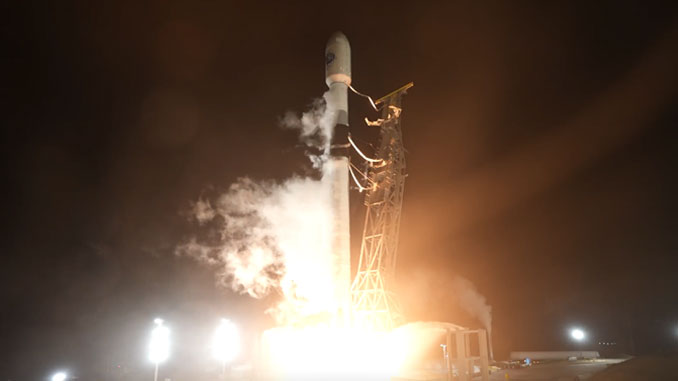
Starlink Group 15-25

Falcon 9 Block 5 · SpaceX

Add to calendar

Daylight at the pad Visible close in as a bright point and a contrail; nothing at distance.

Space Launch Complex 4E
Vandenberg SFB, CA, USA

Go

10:33 UTC

Dragon CRS-2 SpX-35

Falcon 9 Block 5 · SpaceX

Add to calendar

Twilight — the spectacular case The ground is dark and the vehicle climbs into sunlight. This is the launch that makes a glowing jellyfish across half a continent, and it is worth going outside for.

Space Launch Complex 40
Cape Canaveral SFS, FL, USA

Go

23:44 UTC

USSF-481

Falcon 9 Block 5 · SpaceX

Add to calendar

Daylight at the pad Visible close in as a bright point and a contrail; nothing at distance.

Space Launch Complex 4E
Vandenberg SFB, CA, USA

Go

19:41 UTC

Martian Moons eXploration (MMX)

H3-24 · Mitsubishi Heavy Industries

Add to calendar

Full darkness at the pad A bright moving star and the engine plume. Spectacular near the pad, subtle at distance.

Yoshinobu Launch Complex LP-2
Tanegashima Space Center, Japan

Go

Eleven subjects, eleven feeds

Subscribe →

Every story is filed by subject and every subject publishes its own Atom feed. Take the two you care about and ignore the rest — that is the whole idea.

C-band radar · 5.4 GHz Launch & Flight Rockets leaving the ground, boosters coming back, and the companies arguing about who gets to do it next. 368 stories · Atom feed S-band · 2.2 GHz Crewed Spaceflight People off the planet: station life, spacewalks, Artemis, and the slow business of learning to stay. 406 stories · Atom feed Thermal IR · 10 µm The Solar System Robots at work on other worlds — rovers, orbiters, landers and the moons that keep surprising us. 505 stories · Atom feed He II · 30.4 nm The Sun & Space Weather Flares, coronal mass ejections, aurorae, and the geomagnetic storms that reach the ground. 205 stories · Atom feed O III · 500.7 nm Stars & Supernovae How stars are made, how they burn, and the spectacular ways they stop. 209 stories · Atom feed C₂ Swan · 516.5 nm Comets & Asteroids Comets, asteroids, meteor showers, and the interstellar visitors that pass through without stopping. 114 stories · Atom feed H₂O · 1.4 µm Exoplanets & Life Other worlds around other stars, and the long argument about whether anything lives on them. 147 stories · Atom feed Hβ · 486.1 nm Telescopes & Instruments The machines that do the looking — on mountaintops, at Lagrange points, and still on the drawing board. 296 stories · Atom feed Ku-band · 12 GHz Satellites & Orbit The increasingly crowded shell around Earth: constellations, debris, regulation and Earth observation. 395 stories · Atom feed Fe Kα · 6.4 keV Black Holes Event horizons, accretion discs, relativistic jets, and the gravitational waves left over when two of them meet. 153 stories · Atom feed Lyman-α · 121.6 nm Galaxies & Cosmology Structure on the largest scales — the early universe, dark matter, dark energy, and how it all fits together. 287 stories · Atom feed

What this is

The colophon →

Everything above is what happened, gathered from 51 feeds and credited to whoever reported it. Every headline here links straight back to the publication that wrote it, because a summary that replaces the click is a summary that has taken something.

Everything else is worked out here. The subjects are ordered by the part of the spectrum each is really observed in — radio at the red end for the satellites overhead, ultraviolet at the violet end for the early universe — and coloured to match, which is the one organising idea the site has. A story is filed by a hand-built vocabulary for each subject, weighted by how decisive a term is: event horizon settles the question, orbit barely counts. Anything that does not clearly belong anywhere stays untagged rather than being pushed somewhere to fill a gap.

The rest of the site is not news at all, and is the part worth staying for.

  • All 110 Messier objects — each with a computed answer to whether you could actually see it: nine grades of sky against five instruments, worked out from surface brightness rather than looked up, because magnitude alone gets the two most-looked-at objects in the catalogue badly wrong.
  • What is overhead tonight — the Moon, the planets, the showers and the space weather, computed from the clock on every build.
  • A hundred observatories and launch sites — where the work happens, and what the sky is actually like from each of them.
  • The world at night — light pollution, ground stations and the places things come back down.
  • 128 terms — the words space reporting uses without ever explaining them, written out once, properly.

Deep Field is one person's side project. This website has no paywall, no newsletter capture and no tracking beyond what the ad network sets. It costs about the price of a coffee a week to run.

Buy me a coffee